I found that picture today - and it's not a fake story. In 2010 a huge sinkhole opened up in Guatemala city, in the aftermath of Hurricane Agatha.
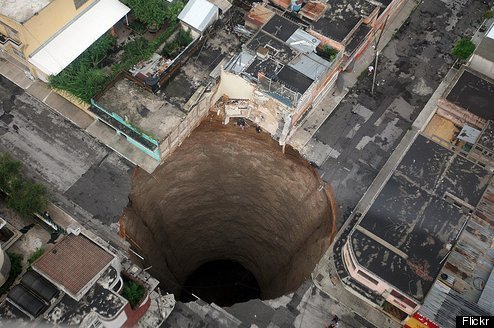
http://www.huffingtonpost.com/2010/06/01/guatemala-sinkhole-is-mas_n_595877.html
Northern Guatemala's limestone base makes sinkholes, or cenotes, common geological features of the forest. I haven't seen any yet, but I'm hoping if I make a trek to one of the Mayan sites we'll come across some. Guatemala city, where this monster formed in 2010 has no limestone base. Instead, the area is riddled with volcanos, and the buildup of ash over the centuries creates a similar situation where water-saturated pockets can collapse.
It looks like something out of an alien movie, where they shoot lasers into the earth to unleash volcanoes or something.
The pictures I'm putting up today are from last week, when I drove to Sayaxche to visit a community where we've run a chile farming project. The Chiles weren't dong very well in most of the fields, and I spent a lot of time taking pictures of the various problems and ailments the plants demonstrated. On the way to one of the fields, we crossed the stream where the locals bath and wash their clothing. We're in the dry season here, so it was predictably low, but the grey water was particularly unappealing.


The surrounding forest was strewn with bags of the chlorox they use to wash their clothing in the stream, and the water was clearly poisoned beyond use. The real fun came when we sat down to lunch with some of the community leaders. When three representatives of the community development organization that has been helping out communities for the past 18 years comes to lunch, the conversation topic most often brought up is what this community needs. Over and over again, they brushed aside their difficulties with the chiles, and the remarkable poverty this town lives in, and focused on water. They need it. During the wet season, their wells fill up, but now that it's getting dry, only one well still provides water. During the summer, they have to buy water from other towns, an hour's walk. Unfortunately the solution they were proposing was to get access to a river flowing just a short walk across the border of a national park. While it was close, and could provide the water the community needed, one look at the bleached stream they already had access to was all we needed to shoot down that idea, and express just how strongly we felt about them crossing into the park.
We discussed the placement of the wells, and the effect access to water would have on the chiles and on the families' budgets. We proposed the idea of tanks to collect and store water, which other communities have used to great effect. There's an organization solely dedicated to water needs in Petén, which helps communities obtain and install these tanks. Unfortunately, this community isn't well organized enough to win a project. It's not effective or fair to start a water project in a community if everyone who will benefit isn't ready to contribute. They're working on the organization factor - they worked with ProPetén's World Bank Economic Diversification project (where they got the chiles), and I remember the wrap-up meeting for that project. The representatives came dressed in traditional Q'eqchí garb and it was their first project working with any sort of organization. They might have a lot of work to do, but hopefully they'll get there.

No comments:
Post a Comment